Leading For Positive Impact

A Practical Guide For Next Generation Leaders.

My strength lies in a step-by-step approach. And I give you a clear visual playbook that guides you through each stage to ensure steady progress. From big ideas, complex strategic chellenges to impact.

jh

A Foreword Of Inspiration by Jens Husted

Over my 30-year career leading companies, projects, and hundreds of people around the world, I’ve met many remarkable individuals. Kristian stood out immediately. He already had the talent; what he needed was someone to enable him, a sparring partner and guide to unlock his full potential. And that’s exactly what I saw in him.
– Jens Husted

Jens Husted is a Danish business leader and entrepreneur with more than 30 years of international experience founding companies, leading large organizations, and managing projects around the world. Known for valuing people above all else, he leads with his heart, whether he is enabling future leaders, or solving highly complex projects.


 Over the course of a long career working in both small and large companies, leading more than 700 employees, managing projects in over 25 countries worth more than 120 million dollars, founding and selling businesses, and running my own company for more than 30 years, I have met an incredible number of people. Some stand out, for better or worse. 


And then, there are those who stand out so quickly that you know at once they have far more to offer than they let on. That was my first impression of Kristian. Within a very short time, I knew he was someone with unusual abilities, perhaps not even fully aware of himself of how his life experiences had shaped him into someone with a remarkable and still‑unrealized potential. Kristian managed, in his own humorous, unique, and humble way, to present himself and his background in such a way that I quickly saw that what he needed was not talent; he already had that. He needed someone who could enable him, a sparring partner, and guide to help him unlock his potential. 


Our paths first crossed through music. Alongside my professional career, music and entertainment have always been passions of mine. I have spent a lifetime playing and performing, and those lessons – communicating, attracting attention, bringing people together, and doing so with credibility, have served me well in business. For the past 17 years, I have been a singer in a band where Kristian’s father, Per, plays the drums. In 2018, Per asked me to meet Kristian, believing I might be someone who could guide him. 

Since then, it has been a great pleasure and inspiration to coach, advise, and collaborate with Kristian, both in Denmark and abroad, and to watch how, with his own abilities and only a few nudges, he has been able to release a potential I have rarely seen. From a winding path, including a well‑executed leadership role in Barcelona in 2018, to a strong position in Riga, the founding of several companies, a successful leadership role in a large international company with travel across the globe, the completion of a PhD with highest possible distinction, and now the publication of this book on strategic leadership, it is clear to me that Kristian understands what it means to turn theory into practice. Music offers a fitting parallel to leadership. You can be the best singer or band leader, have read everything about music, and still fail if you can’t make it sound good together. To start right, keep the rhythm, and finish in a way that leaves the audience delighted requires that everyone can play and wants to play. Perfection is not necessary every time, but you must believe in the lyrics, sing them with joy, and deliver them so that the audience feels and enjoys them. And you must be willing to step up and perform whenever asked, without showing fatigue.


 Leadership, in my view, is the same. It rests on personal connection, an understanding of people’s differences, and the ability to handle those differences calmly, while also daring to make the hard calls. “It is better to make a bad decision than none at all.” Turning theory into practice requires patience, talent, and experience, whether in leadership, in your own business, or in writing a book. And that is precisely what Kristian has managed to capture in these pages.


A good friend and mentor once told me, many years ago: “No one ever insulted their way to a good friendship or a good business.” That thought has stayed with me throughout my career as a business leader.  I wish you great enjoyment and learning in reading this book.

– Jens Husted

lucy

Lucy Blount, P.E.

The Art of Seeing the Whole Person

As Lucy said during lunch, 18 months into a global digital transformation, when we talked about driving change across continents.

It’s almost like running a campaign, you have to meet people where they are. The hard truth? It takes a marathon level of empathy that most struggle to sustain until the end.”

This book gives you the how

Think of it as an advanced MBA in leadership, delivered through lived cases, engaging visuals, and custom tools.

It is designed so you do not have to read it from end-to-end. 

cover webiste pic
rout green

Published by Routledge

My book is published by Routledge, founded in 1836 and recognized globally for shaping thought leadership in business, leadership, and the social sciences. Routledge is part of the Taylor & Francis Group one of the world’s leading academic publishing houses.

Routledge’s catalogue has featured thinkers like Albert Einstein. I’m not claiming to bend space-time, but it’s reassuring to share a publisher with someone who did.

Being published by Routledge signals rigorous editorial standards, international reach, and intellectual credibility.

The ENABLERS
Visual Guidance That Will Enable You Step-By-Step

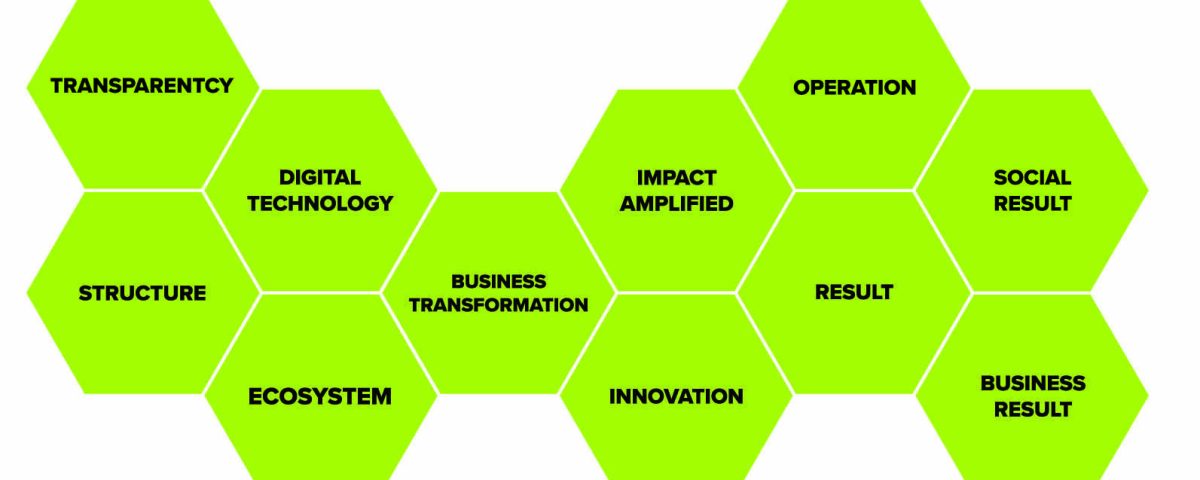
I’ve designed this model around six leadership enablers: Empowerment, Structure, Ecosystems, Technology, Transformation, and Scalability.

You can work through them in a swquential way OR you can zoom in on specific Enablers. 

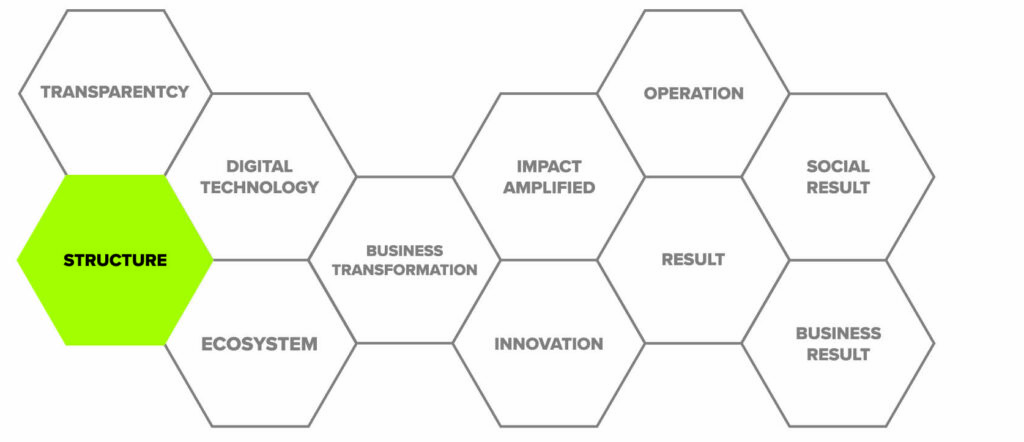
At first the entire model is displayed, highlighting the Enabler we are working with. We then go into deail by zooming in on the specific Enabler. 

Zoom in – Zoom out.

For the chapter skippers, look for the parts marked with essential takeaways, these are the high‑leverage moves.

Let Us Take A Look Inside

fig 5.1

Beyond
The Org Chart

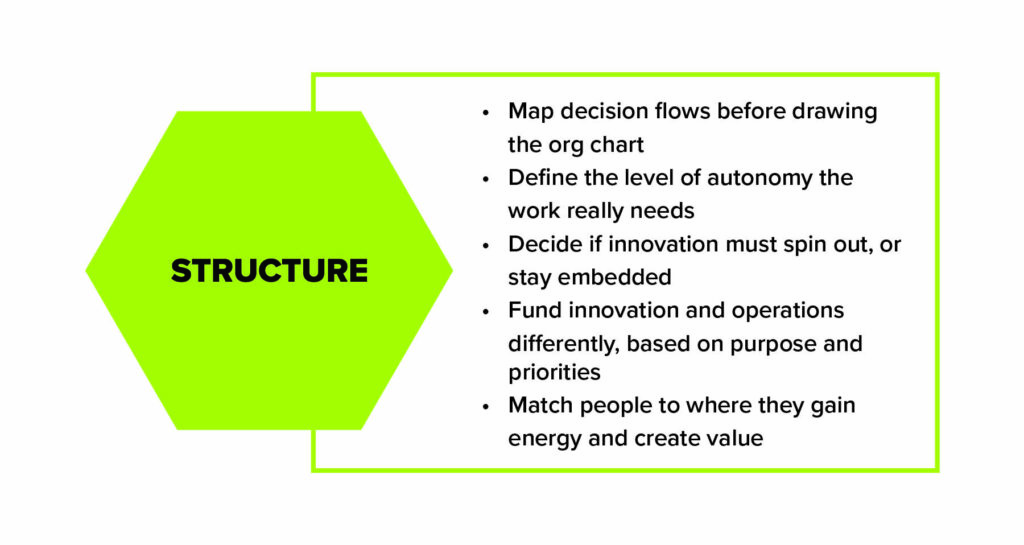
STRUCTURE: Before we talk org charts, let’s talk trust.
I once led a complex transformation where a respected leader from the field was given responsibility, but not mandate. One day, when I pushed to regain momentum, he said::
“I have a lot of additional responsibility. But no mandate”

That’s when it hit me. If you ask someone to lead change without real backing, they become a volunteer.
And when that happens, three things follow: 1. They burn out, 2. the work stalls, and 3. on top of all, they lose credibility with the people impacted by the changes.

Map Decision Pathways

STRUCTURE: Too often, leaders start with titles and checking boxes. But structure without decision clarity creates conflicts and friction. Work bounces around, escalations pile up, and no one’s sure who’s actually in charge.

Instead, you should flip the process. For each critical area, you map the actual decision flow:

• What needs to be decided?
• Who provides input?
• Who makes the call?
• Who needs to know?
• Who is responsible and who will be held accountable?

banner 7.jpg

"No Bla. Bla. Bla.
No Business BS.
Straight To The Point
"
- Nis Alstrup, MD

This book is built on high‑quality research and first‑hand experiences of failures and successes of executives, leaders, managers, and frontline employees. Told through data, real‑world case studies, and hard‑earned insights, this book serves as the foundation for your practical guide on how to create and sustain a positive impact.

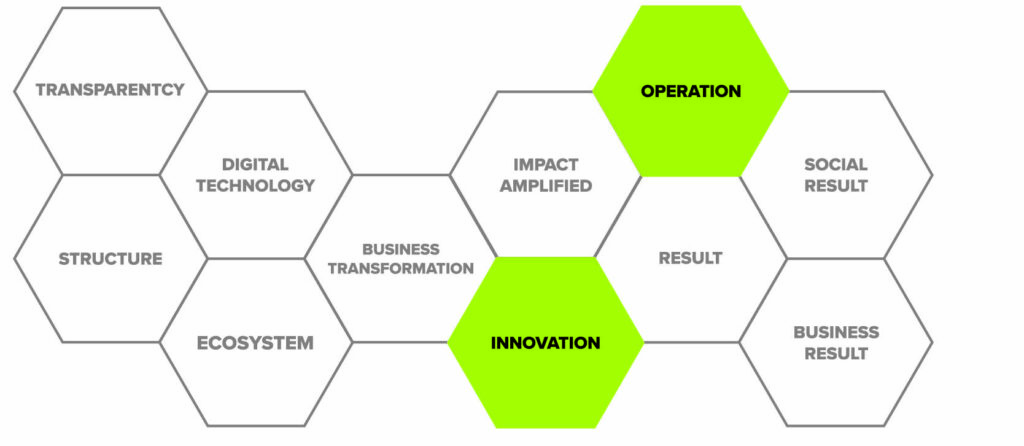
Balance Operations & Innovation

fig 11.1

Finding Your Balance

Balance: striking a balance does not mean equal focus on each side, in most cases, means imbalance, and it’s up to you to enable the right balance at the right time based on your context.

Operations: Optimize existing strengths, reduce variance. Build a culture of continuous improvement for example.

Explorer Innovation: Capture future opportunities, increase variance.

Ask yourself: How to allocate resources wisely between the two? 

Who fits in Ops with more clarity and routines and who fits in Innovation with more uncertainty and experiments?

The Necessary Strategic Tension One builds the future.
One runs the present.

The fascinating story of how two contradictory strategic impulses were held in balance – or, rather, found their perfect imbalance. Follow Horizon56 from its first designs, through its spin-out, to global reach.

h56 esben thorup

Esben Thorup

Focus: Innovation & Exploration of the Future before others!

"Every spin‑off story is unique. However there are certain foundational enablers, critical things that absolutely must align. To be honest, I struggle to single out one dominant factor behind our success because, in reality, it wasn’t one thing.

First and foremost was visionary management support. Funding is another key. Building a business‑to‑business operation isn’t something you achieve in a few months, it takes sustained investment over several years. Accepting this reality upfront is essential
.”

Esben, Chief Executive Officer

Michael Olesen

Focus: Run today's ops, exploit resources and continues improvement

"Looking ahead a few years, I hope our rapid growth stabilizes somewhat. We’ve expanded so aggressively that now might be the right moment to pause, to consolidate, and ensure our foundations are solid. I’m not suggesting we halt expansion completely, because new opportunities might emerge.

Stability and innovation must coexist carefully. If we neglect stability, we risk failure; yet, if we stop innovating, we risk becoming obsolete.


- Michael, Chief Operating Officer

h56 michael olesen
claudio copy no back

Claudio Caputo, MCIPD, LSSBB

A Powerfull Case Study

Claudio joined a rapidly expanding logistics company which Empowerment and Transparency was facing several challenges due to inefficiencies in workforce
planning, gaps in employees’ development plans, and its visibility.

Chapter 4 is a powerful example of How abstract challenges was transformed into positive impact! In short, Claudio develped a simple visual tool “The Compentency Matrix”.

The Competency Matrix  became an enabler for empowering employees to see their work in alignment with the company’s strategic vision. This shift in perspective fostered a renewed sense of pride and responsibility, encouraging innovation and collaboration. 

This Book Is Both
EXPERMINTAL & EDUCATIONAL
You Will Learn and Immediately Apply


Being experiential: means you’ll work with the material directly. You’ll write. Sketch. Map decisions. Adapt tools to your own team or context. You’ll use this book the way great leaders learn, by doing. 

   Being educational: means you’ll understand how leadership actually works, not just in theory, but through step‑by‑step frameworks that simplify complexity.